

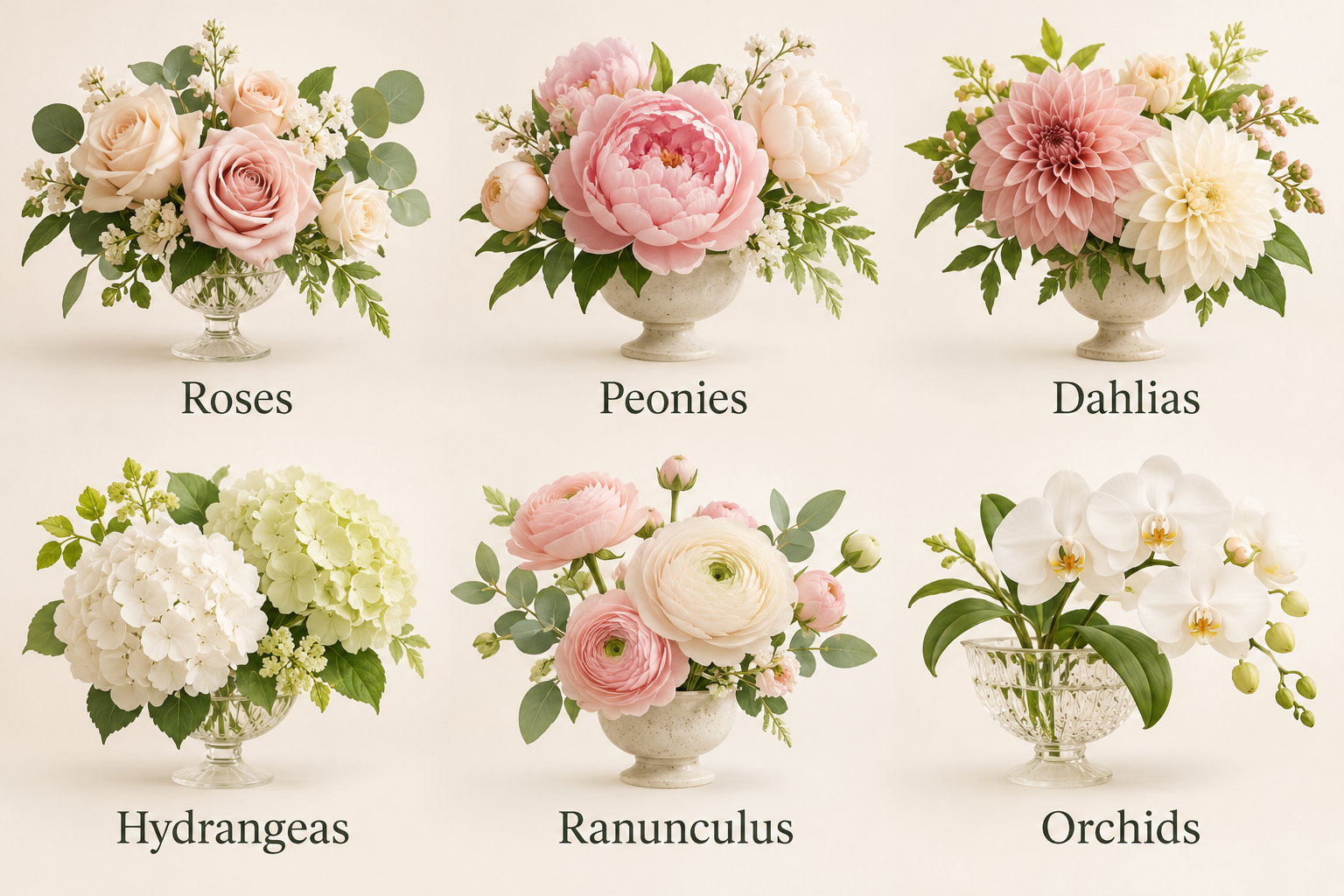
Hello, lovebirds! Wondering what flowers are good for a wedding centerpiece? Roses, peonies, dahlias, ranunculus, hydrangeas, and orchids are all beautiful choices. But the perfect centerpiece isn’t just about picking pretty blooms. It’s about finding something that fits your wedding style, works with your venue, and makes your guests feel welcome.
Whether you’re dreaming of romantic garden arrangements, elegant white flowers, or something completely out of the box, there are plenty of ways to bring your vision to life. Let’s explore the best options and a few practical details that can make all the difference!
A Few Things to Know Before Choosing Your Flowers
- Roses, peonies, and ranunculus bring a soft, romantic touch to wedding tables.
- Dahlias, hydrangeas, and lisianthus create beautiful volume and texture.
- Seasonal blooms can offer better availability and more flexibility with your budget.
- Low arrangements or carefully positioned tall designs help guests see one another.
- Greenery, candles, and smaller bud vases can complement your main arrangements.
- Your florist should consider the venue, table dimensions, weather, and setup schedule.
Which Flowers Look Best in Wedding Centerpieces?
The best flowers combine beauty, shape, and practical durability. Some create a full, romantic arrangement, while others add height, texture, or modern elegance. The right combination depends on your celebration.
Here are some popular types worth considering:
- Roses: Perfect for classic, romantic weddings. They come in versatile colors and are generally available year-round, making them a reliable choice for elegant centerpieces.
- Peonies: Ideal for soft, luxurious wedding arrangements. Their full, delicate petals create a romantic look, although availability depends on the season.
- Dahlias: A beautiful choice for colorful summer and fall weddings. Their layered petals add texture and personality, but they have a shorter vase life and are sensitive to frost.
- Hydrangeas: Excellent for creating full, lush centerpieces. Their large blooms add volume to arrangements, but they need consistent hydration to stay fresh.
- Ranunculus: Perfect for elegant, garden-inspired wedding tables. Their delicate, layered petals add softness, although seasonal availability and fragile stems require extra care.
- Orchids: Ideal for modern, sophisticated, or tropical celebrations. Their distinctive shapes create an elegant appearance, but it’s important to select varieties suited to your venue.
- Carnations: A practical choice for budget-conscious wedding designs. They are long-lasting, available in many colors, and can create beautiful, full arrangements without requiring expensive blooms.
Roses are especially versatile. You can pair blush roses with greenery for a soft garden look or choose deeper colors for a more dramatic reception.
Dahlias are another fabulous option for late-summer and fall weddings. Their interesting shapes bring personality to an arrangement. However, according to Oregon State University’s dahlia guide, properly conditioned cut dahlias typically last around four to six days. Timing and handling matter!
For something modern, orchids and sculptural greenery can look stunning without requiring an enormous number of stems.
Choose Flowers That Match Your Wedding Season
If you’re deciding what flowers are good for a wedding centerpiece, your date is a great place to start. Seasonal choices can bring a natural beauty to your tables while helping your florist work with what’s available.
- Spring: Tulips, ranunculus, sweet peas, and hellebores create soft, romantic arrangements.
- Summer: Peonies, zinnias, cosmos, and hydrangeas bring cheerful colors and volume.
- Fall: Dahlias, chrysanthemums, and textured foliage add warmth and charm.
- Winter: Amaryllis, roses, evergreen branches, and imported blooms create elegant displays.
Location matters, too! For Hawaii weddings, tropical favorites such as anthuriums, ginger, and orchids can create a stunning celebration. The Hawaii Tropical Flower Council’s flower guide explains the variety of tropical flowers and foliage available.
For Washington and Upstate New York celebrations, ask about seasonal local flowers and lush local greenery. Availability changes with growing conditions, so give your florist some flexibility.
How Big Should Your Wedding Table Arrangements Be?
Your wedding centerpieces should complement the table without making conversation difficult. A beautiful arrangement loses some of its charm when guests have to lean around it to see each other!
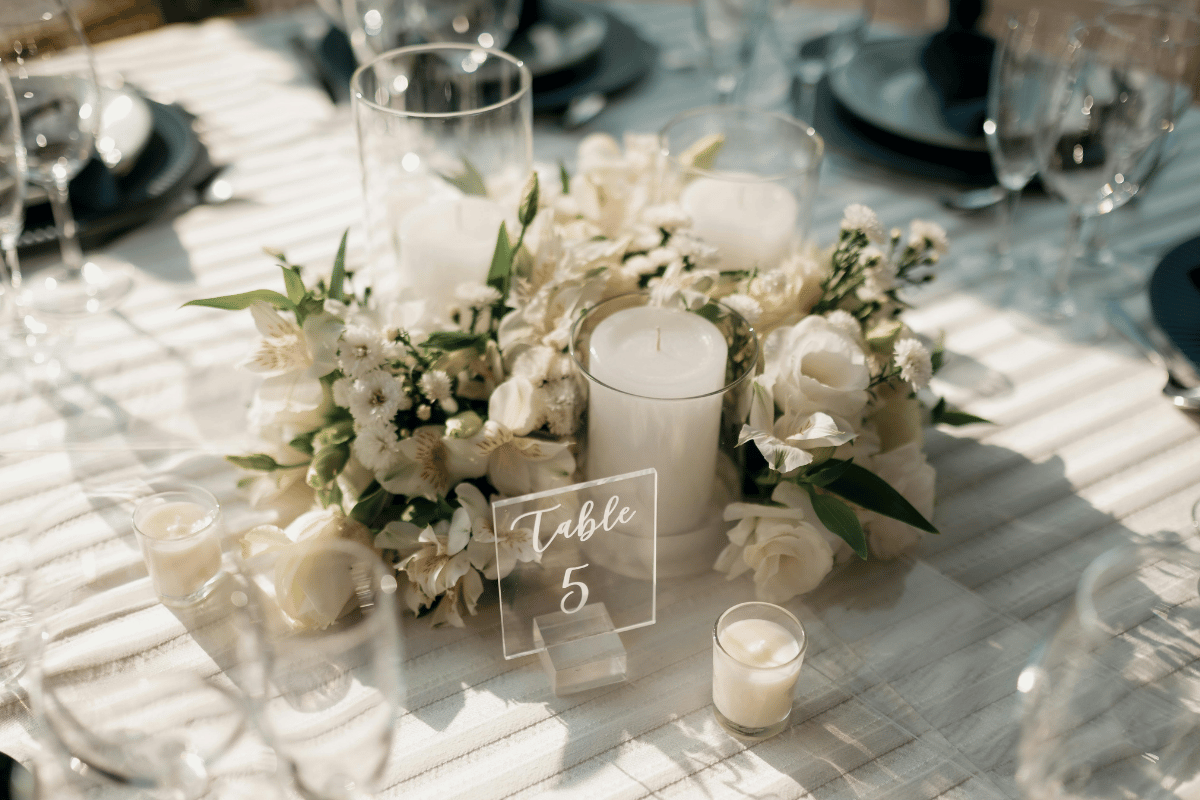
For round tables, consider low, full arrangements that sit comfortably below eye level. For long banquet tables, try a combination of small bud vases, greenery, and candles.
Keep these details in mind:
- Leave room for dinner plates, glassware, and shared dishes.
- Use greenery like eucalyptus or ferns to add texture.
- Avoid strongly scented blooms near dining areas when guests may be sensitive.
- Keep tall arrangements securely supported and clear of guests’ sightlines.
- Consider the shape and color of your table linens.
A Little Planning Tip: Before approving your floral design, test an arrangement from a seated guest’s perspective. It should look just as beautiful across the table as it does in photographs!
How Do You Keep Centerpiece Flowers Fresh?
Fresh flowers need clean water, appropriate temperatures, and careful handling. Heat, direct sunlight, and dry conditions can affect how your arrangements look throughout the celebration.
The University of Minnesota Extension’s floral care recommendations emphasize clean vases, hydrated stems, and removing leaves below the waterline.
Ask your florist about delivery timing, refrigeration requirements, and how the blooms will be kept hydrated before guests arrive.
This is particularly important for outdoor summer celebrations or arrangements that must travel between ceremony and reception spaces.
Beautiful Centerpiece Ideas Without Overspending
You don’t need large, elaborate flower arrangements on every table to create an unforgettable atmosphere.
For example, a reception with 12 guest tables could feature 12 statement arrangements or a mix of smaller designs. Your overall cost will depend on the varieties, quantities, containers, and labor involved.
Consider these ideas:
- Choose one statement bloom and complement it with smaller supporting stems.
- Use bud vases with fresh blooms for a relaxed, garden-inspired look.
- Combine white flowers with textured greenery for simple elegance.
- Mix a few premium arrangements with smaller designs throughout the room.
- Reuse ceremony flowers at the reception when their containers and setup allow safe transportation.
Smaller pansies, violas, and nasturtiums can also add a playful touch to suitable garden-style designs, although their delicate nature makes them better accents than primary blooms.
Budget Tip: Ask your florist for a complete estimate covering flowers, containers, delivery, setup, and removal. The least expensive stems don’t always create the lowest total cost.
Bringing Your Wedding Flower Vision Together
Choosing what flowers are good for a wedding centerpiece is just one piece of the planning puzzle. The next step is making sure those gorgeous Pinterest ideas work with your venue, tables, budget, and overall wedding style.
At Emerald Engagements, we love helping couples create celebrations that reflect who they are. Whether your vision includes timeless elegance, whimsical garden-inspired wedding florals, or something wonderfully unconventional, we’re here to help turn those ideas into a thoughtful plan.
Our design services include helping you find a florist, choose décor and tabletop rentals, and develop a vision board. With full-service planning, we can also help coordinate vendors and manage the details that bring everything together.
Here’s what makes our approach special:
- Established in 2020, with years of wedding planning experience.
- Led by Hannah, who joined the team in 2022.
- Design services that include florist and rental vendor selection.
- Full-service support with design conceptualization and vendor management.
- Wedding coordination with unlimited email communication and timeline guidance.
- Experience supporting celebrations throughout Washington State, Upstate New York, and Hawaii.
Let’s Create Wedding Tables You’ll Love!
Still wondering what flowers are good for a wedding centerpiece that truly reflects your personality? Let’s make your vision happen!
We help couples plan celebrations across Seattle, Bellevue, Tacoma, Everett, and other Washington communities, along with Upstate New York and the Hawaiian Islands. Travel is also available upon request.
Whether you’re just starting to gather inspiration or ready to bring everything together, get in touch with our team. We’d love to hear your ideas and help you plan a fabulous celebration!
Frequently Asked Questions About Wedding Centerpiece Flowers
How Many Different Flowers Should Be in a Wedding Centerpiece?
Two to four varieties can create a balanced arrangement. Mixing one focal bloom with complementary textures often provides enough visual interest without making the design feel crowded.
Can I Use Artificial Flowers for My Wedding Centerpieces?
Yes, quality artificial flowers can be a practical alternative. They’re especially useful for arrangements that need to be prepared well in advance, although realistic options may still be expensive.
How Far in Advance Should I Book a Wedding Florist?
Aim to contact florists six to twelve months before your date, particularly during peak wedding season. Earlier booking gives you more options for availability and design consultations.
Can I Use My Bridal Bouquet as a Reception Centerpiece?
Yes, a bridal bouquet can be displayed in a suitable vase at the reception. Arrange for someone to move it safely after the ceremony and keep it hydrated.
Should Every Wedding Table Have the Same Flowers?
No, your tables can feature different combinations while sharing a consistent color palette. Varying the height, texture, and shape can create a beautiful, cohesive reception design.